Standard Voltage and Frequency Options for Industrial Grids
The standard three-phase motor configuration for ISG vertical pipeline centrifugal pumps aligns with global industrial power standards, with 380V/50Hz and 440V/60Hz being the most common supply specifications. These voltage and frequency combinations are selected to match the dominant electrical infrastructure in different regions, ensuring the motor can achieve its rated speed and torque output without requiring external frequency converters under normal grid conditions. The motor's insulation system is designed to withstand voltage fluctuations within ±10% of the nominal value, providing stable operation even when grid voltage experiences minor transient dips or surges. For installations where the power supply frequency differs from the motor's nameplate rating, the pump's hydraulic performance will shift accordingly, as the operating speed is directly proportional to the supply frequency. Users must verify the local grid specifications before final motor selection, as connecting a 50Hz motor to a 60Hz grid without adjustment will cause the pump to overspeed, potentially exceeding its maximum allowable operating parameters.
Matching Motor Power to Pump Hydraulic Load Profiles
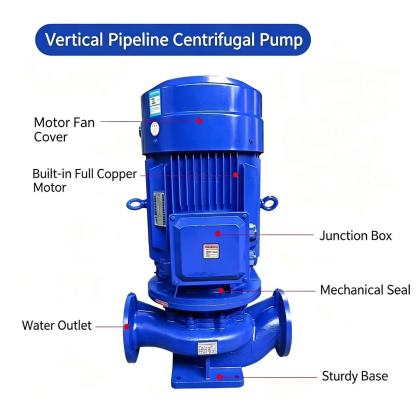
Selecting the correct motor power rating involves more than just comparing the calculated pump shaft power to a standard motor power list. The motor must provide sufficient starting torque to overcome the initial static resistance of the system and accelerate the pump to its operating speed, especially in high-head applications where the impeller faces significant hydraulic load from the start. The motor's service factor, a multiplier indicating its ability to handle temporary overload, should be considered for applications with variable flow demands or potential process upsets that could push the pump beyond its design point. For pumps operating in environments with high ambient temperatures or at significant altitudes above sea level, the motor's continuous power output may be derated, necessitating the selection of a motor with a higher nominal power to compensate for the reduced cooling efficiency. The direct coupling between the motor shaft and the pump impeller eliminates alignment issues common in belt-driven systems, but it also means the motor must handle all radial and axial loads from the pump, making the bearing design within the motor a critical factor for long-term reliability.
Protection Features and Special Configuration Considerations
Standard three-phase motors for this pump series incorporate multiple protection features to ensure safe operation under diverse industrial conditions. Thermal overload protection is integrated to prevent motor burnout due to sustained overcurrent, while built-in thermal sensors can provide early warning of bearing overheating or insulation degradation. For installations in hazardous areas where flammable vapors or dust may be present, motors with appropriate explosion-proof certifications must be selected, with the enclosure rating matching the specific zone classification of the installation site. In coastal or high-humidity environments, motors with enhanced corrosion protection and higher ingress protection (IP) ratings are recommended to prevent moisture and salt from damaging internal components. When the pump is used with variable frequency drives (VFDs) for flow control, the motor must be specified as inverter-duty rated to withstand the voltage spikes and harmonic heating associated with PWM drive outputs. All these configuration choices must be documented and aligned with the overall system design to create a cohesive and reliable pumping solution that meets both performance and safety requirements for the intended service life.


 Contact Us

 Online Service
 My information
 My news
 My collection
 My message
 Back to Top