|
|
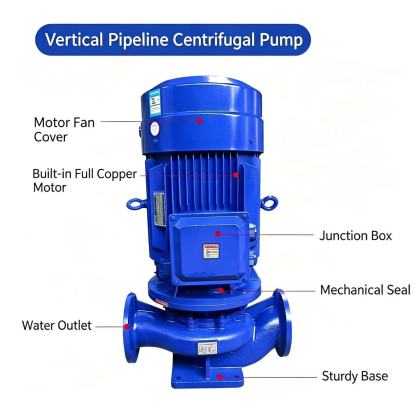
ISG Vertical Pipeline Centrifugal Pump bearing temperature monitoring guideBearing temperature monitoring for an ISG vertical pipeline centrifugal pump is one of the most effective early warning systems for preventing catastrophic unplanned downtime, yet many maintenance teams only spot-check temperatures during routine rounds and miss the subtle, gradual upward trends that signal developing internal damage. Even a small, steady rise in bearing temperature over days or weeks often precedes full bearing failure by a wide margin, giving teams plenty of time to schedule corrective action during planned maintenance windows.
Begin every temperature monitoring workflow by selecting the correct measurement points and calibrated tools that deliver consistent, accurate data you can rely on for trend analysis. Never take readings only on the outer surface of the bearing housing far from the rolling elements, as this will give you artificially low values that hide real internal heat buildup deep inside the bearing cavity. Place contact temperature sensors or non-contact infrared measurement points as close as possible to the actual bearing outer race, targeting the machined metal surface of the bearing housing directly aligned with the rolling element path, to capture the most representative temperature reading. Confirm every handheld measurement tool is calibrated against a known reference standard on a regular schedule, and mark the exact measurement spot on the bearing housing with a permanent marker, so every subsequent reading is taken at the identical location to eliminate comparison errors from inconsistent targeting. Establish clear, context-aware operating limits tied to real-world field performance, rather than relying on generic one-size-fits-all temperature thresholds that do not account for actual operating conditions. For standard rolling element bearings under normal continuous load, a stable operating temperature below 80 degrees Celsius is considered acceptable for long-term reliable service, while readings that climb past 85 degrees Celsius and keep rising require immediate inspection to identify the root cause. For sleeve or plain bearings, the maximum stable operating temperature should stay below 70 degrees Celsius, as these designs rely on a thick hydrodynamic oil film that breaks down much faster at elevated temperatures than the grease film in rolling element units. Pay extra attention to the temperature rise above ambient air temperature, not just the absolute reading, because a 30 degree Celsius rise over ambient that stays perfectly flat is often far more reliable than a stable 75 degree Celsius reading taken on a day when surrounding air temperatures are 45 degrees Celsius. you enough lead time to plan a bearing replacement during the next scheduled process outage. Cross-reference every temperature reading with vibration data,Once you have consistent, repeated temperature data, interpret trends and cross-reference with other operating parameters to identify developing faults before they escalate. A sudden 10 to 15 degree Celsius jump in temperature over a single operating shift almost always points to loss of lubrication, incorrect lubricant type, or a partial blockage in the bearing cooling circuit that requires immediate attention. A slow, steady upward drift of 2 to 3 degrees Celsius every week over several months signals gradual wear in the bearing rolling elements or race surfaces, giving motor current, and pump operating flow conditions, to rule out temporary factors like extended operation far off the best efficiency point that can create temporary, non-damaging temperature spikes that do not require bearing service. Log every temperature reading, ambient condition, and pump operating load point into the equipment’s permanent service history, so you can build a clear baseline of normal performance for that individual pump unit. This structured, field-validated monitoring approach aligns with widely accepted industrial pump maintenance best practices, catches early bearing damage long before it causes failure, and extends the total reliable service life of the unit across years of continuous operation. |