|
|
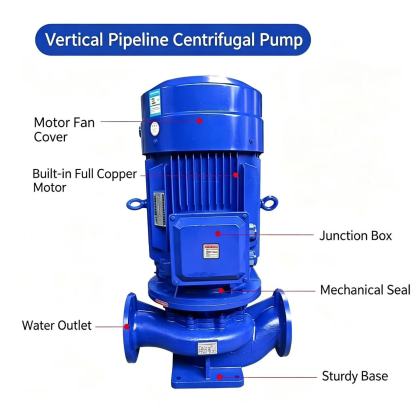
ISG Vertical Pipeline Centrifugal Pump common failure causes summaryUnexpected performance drops and unplanned shutdowns on site often trace back to multiple interacting root causes rather than a single obvious fault. Understanding how mechanical, hydraulic, and operational factors combine to degrade an ISG vertical pipeline centrifugal pump helps maintenance teams intervene earlier and reduce repeat failures. Most issues develop gradually through normal wear, incorrect setup, or deviations from acceptable operating limits.
Misalignment and Unbalanced Radial LoadsShaft misalignment between the pump and motor introduces continuous unbalanced radial loads that the bearing system was not designed to absorb. Even small deviations from coaxiality can generate increasing vibration as operating hours accumulate. This vibration transfers directly to the seal faces, impeller, and bearing housing, accelerating wear on multiple components at the same time. Over time, the repeated stress can cause fasteners to loosen, coupling elements to fatigue, and shaft runout to rise beyond acceptable limits. Without regular alignment checks after piping modification or foundation settlement, this fault pattern often leads to cascading damage that appears unrelated at first inspection. Cavitation and Hydraulic InstabilityCavitation begins when local pressure near the impeller eye drops below the vapor pressure of the conveyed fluid, forming small vapor bubbles that collapse violently in higher-pressure zones. The repeated implosion of these bubbles creates localized shock forces that erode the impeller surface and nearby casing walls. Early signs often include subtle noise similar to flowing gravel, slightly increased vibration, and minor fluctuations in flow rate that many operators overlook. As cavitation continues, material loss on the impeller becomes visible, hydraulic efficiency drops noticeably, and the pump can no longer maintain the designed head. Extended operation under these conditions will eventually cause severe structural damage that requires full disassembly and component replacement. Seal Degradation and Leakage ProgressionMechanical seal failure rarely occurs instantly without prior warning. Most leakage problems start from one of several common triggers: insufficient lubrication across seal faces during startup, abrasive particles in the process fluid scoring the lapped surfaces, or prolonged exposure to temperatures outside the material’s acceptable range. A slow, steady drip at the seal port can quickly turn into continuous spraying once the secondary sealing element loses its compression or the spring load becomes uneven. If the pump runs dry even for a very short period, the lack of fluid film between the two seal faces can generate enough frictional heat to carbonize the contact area and destroy sealing integrity immediately. Bearing Overheating and Lubrication BreakdownBearing temperature rise is usually a symptom rather than the root cause of failure. Common contributing factors include excessive grease quantity, degraded lubricant contaminated with moisture or solid particles, and sustained operation under elevated axial or radial loads. Once lubrication film breaks down, metal-to-metal contact between rolling elements and races generates rapid heat buildup inside the housing. The rising temperature further accelerates lubricant degradation, creating a self-reinforcing cycle that can lead to bearing seizure and unexpected shaft stoppage. Regular trend monitoring of bearing temperature and vibration, rather than only reacting to alarms, allows maintenance teams to address lubrication issues long before catastrophic failure develops. System Interaction and Off-Design OperationMany failures originate not from the pump itself but from how it interacts with the surrounding piping and process system. Operating the pump far away from its best efficiency point, repeatedly starting and stopping under high backpressure, or allowing prolonged operation near dead head conditions all impose abnormal mechanical and hydraulic stress. These conditions do not always produce immediate damage, but they gradually reduce component service life and make the unit much more vulnerable to secondary faults. Correctly mapping the actual system curve against the pump’s operating envelope and avoiding sustained off-design operation significantly reduces the frequency of unexpected failures in long-term service. |