Based on your previous focus on operating conditions like temperature, viscosity, and power supply, here is the detailed technical information regarding the maximum suction pressure for ISG vertical pipeline centrifugal pumps.
Pressure Rating and Casing Structural Integrity Limits
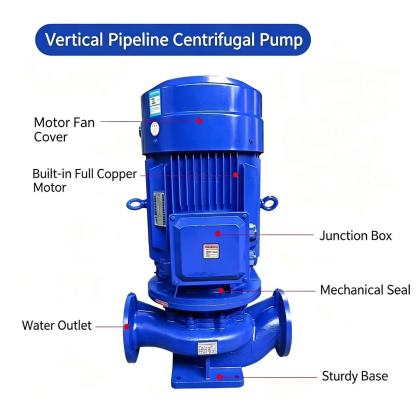
The maximum allowable suction pressure for standard ISG vertical pipeline centrifugal pump models is defined by the pressure class rating of the pump casing and its flanged connections, which is typically 1.6 MPa (16 bar) at ambient temperature. This value represents the maximum static pressure the pump body and its inlet flange can withstand continuously without risk of deformation or leakage. For high-pressure system configurations, specially designed casings with reinforced structures and upgraded materials can be used, raising the maximum permissible suction pressure to match the demands of boiler feed, high-pressure circulation, or other demanding industrial processes. This pressure rating is validated through hydrostatic tests, where the casing is subjected to a pressure significantly higher than the maximum working pressure to ensure a safe margin of safety. The rating must always be considered in conjunction with the temperature of the medium, as the allowable pressure for the material decreases as the operating temperature increases.
Interaction with Net Positive Suction Head (NPSH) and System Design
While the casing has a maximum pressure rating, the operational suction pressure in a functioning system is governed by the need to prevent cavitation. The net positive suction head available (NPSHa) at the pump inlet must exceed the pump's required NPSH (NPSHr) with an adequate safety margin. For systems where the liquid is supplied under pressure from a pressurized tank or a preceding pump in series, the suction pressure can be positive and quite high. In such scenarios, it is critical to ensure that the positive suction pressure, combined with the pump's own developed head, does not cause the total pressure inside the casing to exceed its maximum allowable working pressure, particularly at the pump outlet and during shut-off conditions. System designers must also account for transient pressure surges, such as water hammer, which can create instantaneous pressure spikes far exceeding steady-state values and potentially damage the pump or inlet piping.
Factors Influencing Practical Suction Pressure in Operation
Several practical factors determine the safe and effective suction pressure in a real installation. The temperature of the medium is paramount; for hot water or thermal oil applications, the suction pressure must be high enough to keep the liquid above its vapor pressure at the operating temperature, preventing flash vaporization at the impeller eye. The presence of gases dissolved in the liquid can also affect performance, as a sudden drop in suction pressure may cause these gases to come out of solution, leading to vapor locking and reduced flow. For pumps installed at high altitudes, the reduced atmospheric pressure lowers the maximum theoretical NPSHa from an open tank, which may require increasing the static head or pressurizing the supply tank to maintain sufficient suction pressure. Ultimately, the maximum suction pressure for reliable operation is the lower of two values: the pressure rating of the pump casing and the pressure required to maintain NPSHa > NPSHr + safety margin under all expected operating conditions, including start-up, shutdown, and process fluctuations.


