In the demanding environment of a coal washing plant, clogging within a filter press feed system can bring the entire dewatering process to a sudden, costly halt. When handling dense, variable coal slurry that often contains fibrous material, wood chips, and large or sticky particles, conventional feeding systems are prone to internal blockages that interrupt flow and destabilize pressure. For continuous operations where downtime directly impacts coal recovery, an anti-clogging design is not just a convenience—it is a critical reliability feature that ensures consistent throughput and predictable cycle times.
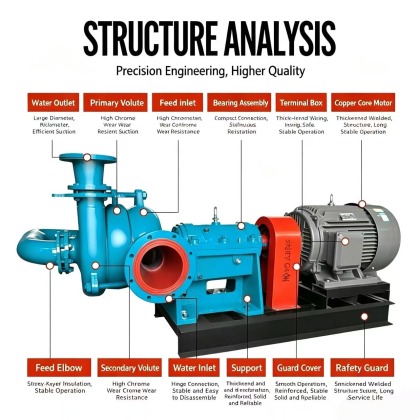
Optimized flow path geometry to prevent particle accumulation
The core of effective anti-clogging performance lies in the internal flow path geometry, specifically designed to eliminate sharp corners, dead zones, and sudden diameter changes where coal slurry particles can settle and build up over time. A smooth, unobstructed passage allows even slurries with high solids content and occasional oversized debris to move through the system without catching on internal surfaces. This design is particularly effective for slurries that carry fibrous materials or sticky clay particles, which are common in many coal washing circuits and are notorious for adhering to surfaces and creating nucleation points for larger blockages. The result is a system that maintains consistent flow characteristics from the start to the end of a long production shift, without the gradual flow restriction that often precedes a complete clog.
High-velocity flushing capability for rapid in-situ cleaning
Even with an optimized flow path, occasional blockages can occur, especially during shifts in raw coal feed quality or unexpected plant upsets. An integrated, high-velocity flushing mechanism allows operators to clear most potential clogs without disassembling any part of the feed system. By temporarily reversing or intensifying flow in a controlled manner, this feature can dislodge accumulated material from critical areas and flush it back into the main slurry stream or out through a dedicated drain port. This capability is invaluable for minimizing operational interruptions, as it turns what would be a lengthy mechanical cleaning process into a quick, in-line procedure that can be performed between standard filter press cycles, often without stopping the feed pump itself.
Large particle handling and debris tolerance
Coal slurry is rarely uniform; it often contains occasional oversize material that bypasses upstream screens or chunks of agglomerated sediment that break loose from tank walls. An anti-clogging system must be able to pass these particles without damage or seizure. This is achieved through generous internal clearances at critical junctures and robust impeller design that can handle intermittent contact with solid debris. Instead of trapping and jamming, the system guides these particles through the volute and out the discharge, preventing them from becoming lodged in narrow gaps. This tolerance for variability in feed material composition provides plant operators with significant operational flexibility and reduces the frequency of emergency stops to clear jammed equipment.


