Heavy-duty bearing assembly is a core load-bearing component for ISG vertical pipeline centrifugal pumps, directly supporting the entire rotor weight, dynamic hydraulic forces, and shaft deflection generated during long-term continuous operation. Its structural robustness and operational stability largely determine the pump’s ability to maintain low vibration, minimal noise, and extended service life even under demanding working conditions that push standard bearing configurations beyond their reliable limits.
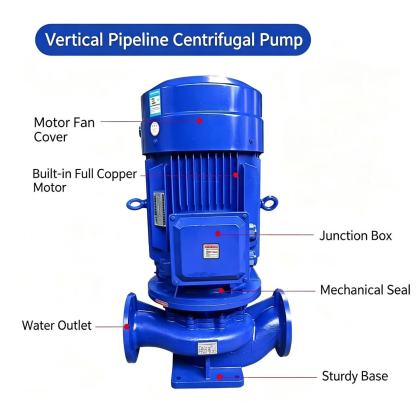
Axial load bearing structure for vertical rotor support
The heavy-duty bearing assembly is engineered to accommodate the full weight of the impeller, shaft, and all rotating components, along with the unbalanced axial hydraulic thrust generated when the pump operates across a wide flow range. This design distributes concentrated axial forces evenly across the bearing contact surfaces, preventing localized overloading that would cause accelerated wear, overheating, or premature fatigue failure during extended unattended operation. The internal geometric profile of the bearing contact surfaces is precision machined to maintain consistent lubricant film thickness even under peak axial load, eliminating direct metal-to-metal contact that could lead to sudden seizure during unexpected system pressure fluctuations. Even when the pump runs continuously for thousands of hours at operating points far from its best efficiency zone, this robust axial support structure keeps shaft axial displacement tightly controlled within safe design limits.
Radial load resistance and vibration damping performance
Heavy-duty radial bearing elements inside the assembly absorb unbalanced radial forces created by hydraulic asymmetry in the volute, minor rotor imbalance, and transient pressure spikes in the connected pipeline system. The bearing housing is constructed with high structural stiffness that minimizes elastic deformation under dynamic radial loading, preserving precise shaft alignment and preventing excessive radial runout that would otherwise damage the mechanical seal and degrade hydraulic performance. The internal clearance between the rotating shaft journal and bearing surfaces is calibrated to balance operational stability, heat dissipation, and lubricant retention, avoiding the excessive clearance that would amplify vibration or the overly tight fit that would generate unnecessary frictional heat. This vibration-damping characteristic also isolates rotor dynamic disturbances from transferring to the pump casing and connected piping, reducing overall system vibration levels even when nearby equipment introduces external structural excitation.
Lubrication and thermal management for continuous heavy-duty operation
The heavy-duty bearing assembly integrates a purpose-built lubrication chamber and heat dissipation flow path that maintains stable operating temperature even during 24/7 continuous operation under full load. The lubricant reservoir is sized to provide sufficient oil or grease volume for extended service intervals, while internal flow guiding features ensure fresh lubricant is continuously drawn across the highest load contact zones to carry away frictional heat. External cooling fins on the bearing housing increase the surface area exposed to ambient air, accelerating natural convective heat rejection and preventing excessive temperature rise that would degrade lubricant performance over time. Sealed barrier features at both shaft entry and exit points block external dust, moisture, and process medium vapors from entering the lubrication cavity, preserving lubricant cleanliness and extending the interval between required maintenance service.
Material selection for extended service life under harsh site conditions
All load-bearing contact surfaces and structural components of the heavy-duty bearing assembly are selected to withstand high mechanical stress, impact loading, and variable ambient temperature conditions commonly found in industrial and outdoor installation sites. The bearing housing material offers excellent rigidity, vibration absorption, and thermal conductivity, while maintaining structural integrity even at sub-zero ambient temperatures that would make lower-grade materials prone to brittle fracture. The friction contact layers are formulated to deliver low friction coefficient, high abrasion resistance, and tolerance for occasional short-duration dry running events that can occur during initial system commissioning or unexpected process upsets. This carefully matched material combination ensures the entire bearing assembly maintains consistent performance across years of heavy-duty operation without requiring frequent component replacement.


