|
|
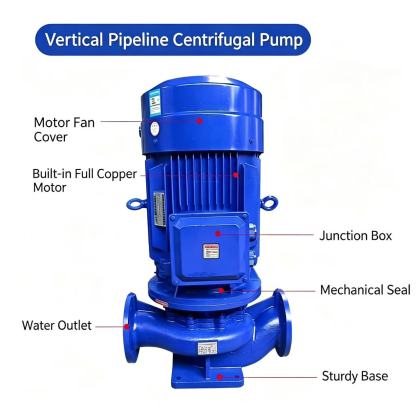
ISG Vertical Pipeline Centrifugal Pump integrated pump motor unitThe ISG vertical pipeline centrifugal pump integrated pump motor unit is engineered to deliver consistent fluid transfer performance across a wide range of industrial and commercial fluid handling scenarios. Built around the ISO 2858 design framework and aligned with established JB/T53058 industry specifications, this integrated configuration eliminates the need for separate coupling assemblies between the pump body and the driving motor, creating a compact, coaxial layout that fits seamlessly into existing pipeline runs without extensive structural modifications. All core hydraulic components are matched to the extended motor shaft, so the entire rotating assembly maintains precise concentricity from the factory, reducing unnecessary lateral movement that can lead to premature wear under continuous operating conditions. This integrated design removes the alignment steps that are required for traditional split-coupled pump systems, cutting down on installation time and lowering the risk of misalignment-related vibration even after months of uninterrupted service.
Hydraulic Performance and Flow Path OptimizationEvery internal flow channel is shaped using iterative computational fluid dynamics modeling to minimize turbulence and hydraulic loss as fluid moves from the suction inlet to the discharge outlet. The streamlined transition between the pump casing and the impeller eye ensures that flow remains stable even when operating away from the nominal design point, extending the efficient operating window to cover partial load conditions that are common in variable demand systems like chilled water loops and building pressurization networks. The impeller undergoes full static balance testing before assembly, and in many high-performance configurations, it also passes dynamic balance verification to keep residual vibration levels well below standard industry thresholds. This careful balancing work means that radial forces acting on the shaft stay consistently low across the full flow range, preventing uneven wear on sealing surfaces and extending the service life of critical rotating parts. The optimized flow path also reduces the formation of low-pressure zones near the impeller inlet, which directly improves the net positive suction head required for stable operation and lowers the risk of cavitation damage when working with fluids at higher temperatures or near vapor pressure limits. Mechanical Seal and Shaft Integrity DesignThe integrated unit uses a hard-faced mechanical seal assembly that is precision fitted to the extended motor shaft, eliminating the gaps and misalignment issues that can cause seal face wear in conventional pump setups. The seal faces are engineered to resist abrasion from small suspended particles in the fluid stream, and the stationary seal housing includes built-in flushing ports that allow operators to route clean compatible fluid across the seal interface for applications where the process medium could otherwise cause coking or crystal buildup on the sliding surfaces. This direct mounting arrangement removes the need for extended intermediate shafts that can introduce flex under high torque loads, keeping seal face alignment consistent even during start-stop cycles and periods of peak system pressure. Seal replacement can be completed without disconnecting the full pump casing from the adjacent pipeline, as the entire rotating cartridge can be accessed by removing the connection between the motor flange and the pump housing, so system downtime for routine seal maintenance is kept to a minimum. For high-temperature water systems, upgraded seal materials are available to maintain reliable sealing performance even when process fluid temperatures rise above 120 degrees Celsius, without requiring major modifications to the standard integrated unit footprint. Bearing System and Continuous Operation ReliabilityThe heavy-duty bearing assembly inside the motor frame is sized to accommodate both the hydraulic thrust generated by the impeller and the external loads transmitted from the pump end, so the unit can handle long running periods under maximum rated flow without excessive temperature rise in the bearing housing. Grease-lubricated sealed bearings are selected for most standard configurations to prevent contamination from dust and moisture in ambient operating environments, and relubrication intervals are calibrated to match typical. |