|
|
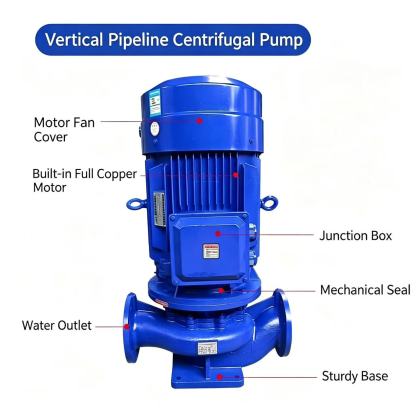
ISG Vertical Pipeline Centrifugal Pump anti-rust surface treatmentThe anti-rust surface treatment for ISG vertical pipeline centrifugal pump components is engineered to preserve structural integrity and maintain consistent performance across decades of exposure to humid, outdoor, or chemically aggressive operating environments. Unlike standard bare cast iron finishes that begin to form surface oxidation within weeks of exposure to ambient moisture, this multi-stage treatment process seals every exposed metal surface to block direct contact between the base material and atmospheric oxygen, water vapor, or trace corrosive agents present in many process fluid systems. The full workflow is applied to all wetted and non-wetted external components, including the pump casing, mounting feet, flange faces, and exposed fasteners, to eliminate unprotected edges that often become the starting point for rust propagation.
This level of surface protection is especially critical for units installed in unheated outdoor pump houses, coastal facilities with high salt content in the air, or industrial sites where process fumes can settle on equipment surfaces and accelerate corrosion. Even for indoor mechanical room installations, the anti-rust treatment prevents surface staining and material degradation that can occur over years of exposure to condensation, water splashes from nearby piping maintenance, or minor spills of common cleaning chemicals. Multi-Stage Surface Preparation Before Coating ApplicationThe anti-rust process begins with full abrasive blasting of all cast iron and steel components to remove loose mill scale, surface rust, and residual casting sand left over from the manufacturing process. This step creates a uniform, slightly textured surface profile that gives subsequent coating layers a strong mechanical bond, rather than adhering weakly to a smooth, unprocessed metal surface that can peel away after only a few months in service. After blasting, all components go through a degreasing wash to eliminate traces of oil, grease, and residual blasting media that could interfere with coating adhesion, and parts are fully dried in a temperature-controlled environment to eliminate any trapped moisture in porous casting surfaces. This thorough preparation step is far more rigorous than the simple wipe-down or single-stage priming used on many general-purpose fluid handling components. Technicians perform a visual inspection and surface cleanliness check on every part before moving to the next treatment stage, ensuring no hidden crevices, threaded holes, or flange groove areas are left with unprocessed bare metal. This attention to preparation eliminates the hidden rust spots that often develop under poorly adhered coatings, where moisture seeps through tiny pinholes and becomes trapped against the unprotected base material. Layered Coating System for Long-Term Corrosion ResistanceThe first layer applied after surface preparation is a high-performance zinc-rich epoxy primer, which provides active cathodic protection that stops rust from spreading even if the topcoat suffers minor scratches during installation or routine maintenance. This primer layer penetrates the fine texture of the blasted metal surface, creating a tight bond that seals off microscopic pores in the casting that would otherwise trap moisture and initiate internal corrosion. Once the primer has fully cured, one or two intermediate layers of epoxy coating are applied to build up a uniform, pinhole-free barrier that blocks water, salt, and corrosive fumes from reaching the base metal. The final topcoat is formulated to resist UV degradation, so it will not chalk, fade, or break down after years of direct outdoor sunlight exposure. This top layer also creates a smooth, non-porous external surface that makes it far easier to wipe away accumulated dust, grime, and chemical residues during routine equipment cleaning, preventing corrosive deposits from sitting on the pump casing for extended periods. For units destined for especially harsh coastal or chemical plant environments, an additional sealant layer can be applied to threaded fasteners and flange edges, the areas most vulnerable to early rust formation in untreated assemblies. Field Durability and Post-Installation PerformanceProperly applied anti-rust surface treatment maintains its integrity even when the pump unit is exposed to frequent temperature swings, high humidity, or occasional splashes of diluted process chemicals that are common in industrial fluid system environments. Unlike thin spray-on paints that can chip away when technicians use wrenches on flange bolts or place tools against the pump casing during maintenance, this multi-layer system resists impact and abrasion damage from normal site handling, so it retains full rust protection even after years of routine service work. Field inspections of units installed in unconditioned outdoor locations show no significant red rust formation after more than five years of continuous exposure, far outperforming standard untreated cast iron pump components. This robust surface protection also prevents rust flakes from breaking off the pump casing and entering the process fluid stream, a critical benefit for systems that supply potable water, chilled water for HVAC loops, or process water for manufacturing equipment. There is no risk of loose oxidation particles traveling downstream and clogging small strainers, control valve ports, or heat exchanger tubes, which reduces unplanned maintenance events across the entire fluid system. Even when the unit is drained and left idle for extended periods during seasonal shutdowns, the sealed anti-rust surface prevents internal and external corrosion from developing on exposed metal surfaces, so the pump can be restarted after months of inactivity without risk of seized rotating parts or blocked flow passages. |