|
|
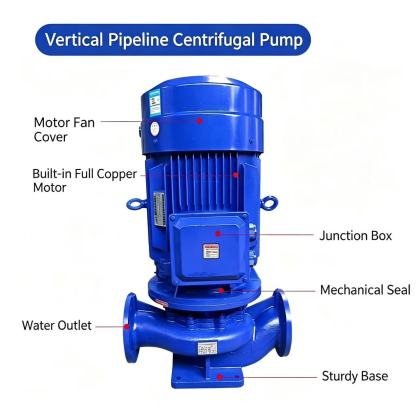
ISG Vertical Pipeline Centrifugal Pump filter matching requirementProper filter matching for vertical pipeline centrifugal pumps directly impacts service life, operating stability, and long-term efficiency across nearly every fluid transfer scenario. An incorrectly selected or improperly installed filter can introduce unexpected flow restriction, create cavitation risks at the pump inlet, or allow damaging solid particles to pass through and score impeller surfaces, mechanical seal faces, and internal casing clearances. Matching filter specifications to the exact system conditions, fluid properties, and pump performance parameters ensures the filter provides full protection without creating new operational problems that reduce overall system reliability.
Mesh size and opening area calibrationThe first core matching requirement aligns filter mesh size with the minimum clearance gaps inside the pump’s hydraulic assembly, rather than selecting an overly fine mesh that causes unnecessary pressure drop at the suction side. For most standard configurations, the mesh opening dimension is set smaller than the narrowest gap between the impeller and casing seal rings, ensuring no solid particle large enough to jam or abrade these critical clearances can pass through into the pump chamber. Typical general service applications use 80 to 100 mesh elements, which block most weld slag, rust flakes, and construction debris while keeping suction side flow resistance within acceptable limits. This calibration process also accounts for fluid viscosity and operating temperature, two factors that directly change how easily fluid passes through the filter element. Higher viscosity fluids move more slowly through fine mesh openings, so systems handling warm or thickened media require a slightly coarser mesh paired with a larger total filter opening area to avoid creating excessive suction side head loss. If the effective flow area of the filter is too small, even a correctly sized mesh will cause the pump’s net positive suction head available value to drop below the required threshold, triggering cavitation that erodes impeller surfaces and creates persistent vibration during normal operation. Installation position and piping layout adaptationFilter matching does not end with element selection, it requires precise positioning and piping layout design that fits the unique inline installation characteristics of vertical pipeline centrifugal pumps. The filter must be installed on the straight suction run upstream of the pump inlet flange, with no elbows, reducers, or valves placed within at least five times the pipe diameter length directly before the filter inlet. This straight pipe section ensures uniform, non-turbulent flow enters the filter basket, preventing uneven localized velocity that would cause partial element clogging and create asymmetric flow entering the pump impeller eye. For installations where the pump is mounted on a vertical riser with upward flow, the filter must be oriented with its access cover facing horizontally rather than downward, so accumulated sediment can be easily removed during routine maintenance without draining large sections of the upstream piping. The matched filter assembly must also never be allowed to carry the full weight of connected suction piping, and independent support brackets should be fitted on both sides of the filter housing to avoid transferring pipe load to the pump inlet flange. This prevents flange distortion, misalignment, and air leakage at the suction connection that would otherwise break the pump’s prime and cause intermittent flow loss. Clogging resistance and maintenance interval alignmentThe final matching requirement ensures the filter’s dirt holding capacity aligns with the expected level of solids in the process fluid and the site’s established maintenance schedule. If the filter’s internal volume for trapped solids is too small, the element will clog rapidly after only a short period of operation, causing suction pressure to drop steadily and forcing operators to perform frequent unplanned service stops. For systems that carry water with consistent low levels of suspended sediment, the filter’s total debris storage capacity is sized to match the longest practical interval between routine system inspections, so technicians can clean or replace the element during standard scheduled checks rather than responding to unexpected clogging events. This alignment also includes selection of a filter housing that allows quick element access without disconnecting adjacent pipe flanges, a feature that drastically cuts downtime during maintenance. For systems operating 24 hours a day with no opportunity for full shutdown, the matched filter configuration can include a dual basket arrangement that allows switching between elements without interrupting continuous pump operation. Every matched setup also includes a pressure differential gauge installed across the filter housing, so operators can monitor the pressure drop across the element in real time and identify exactly when the element requires cleaning, long before excessive clogging begins to impact pump suction performance. |