|
|
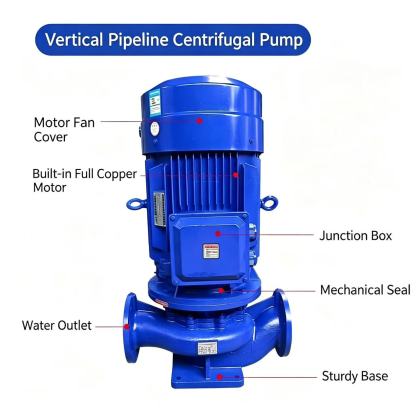
ISG Vertical Pipeline Centrifugal Pump outdoor installation precautionWhen ISG vertical pipeline centrifugal pumps are deployed in outdoor settings, the unique environmental conditions of open-air sites introduce challenges that standard indoor installation practices cannot fully address. Many water supply and circulation projects face limited indoor pump room space, making outdoor placement a practical solution, but improper setup often leads to premature component wear, unexpected downtime, and hidden safety risks. Every outdoor installation decision should start with a clear assessment of local climate conditions, site layout, and long-term operational requirements, rather than directly applying indoor installation routines to exposed locations.
Electrical and Motor Environmental ProtectionStandard indoor motor configurations are not designed for prolonged exposure to rain, direct sunlight, and wide temperature fluctuations. For long-term outdoor operation, the first priority is to upgrade the motor’s ingress protection performance, ensuring the winding insulation, terminal block, and cable entry points can resist water splashes, dust accumulation, and moisture intrusion. Even a simple rain cover cannot fully eliminate the risk of condensation forming inside the motor housing, as rapid temperature changes between day and night can trap moist air that gradually degrades insulation properties over months of continuous use. All cable connections should use properly sealed cable glands, and every junction point must be wrapped with weather-resistant insulation material to prevent water from seeping into electrical paths through tiny gaps. For sites with high annual humidity or frequent temperature swings, adding anti-condensation heating elements inside the motor casing helps maintain stable internal conditions and reduces the chance of unexpected electrical faults during cold or rainy seasons. Structural and Corrosion Control for Exposed ComponentsOutdoor installation leaves every metal part of the pump set, from flange fasteners to exposed shaft ends, vulnerable to rust and surface degradation caused by rain, UV radiation, and airborne contaminants. All exposed bolts, washers, and connection hardware should use corrosion-resistant material options that match the local atmospheric conditions, so that routine maintenance teams can still loosen and remove components smoothly after several years of operation without encountering seized or heavily rusted fasteners. The entire pump body and connected pipe sections that sit outside must receive a durable anti-rust surface treatment, applied evenly across every weld seam and machined surface to create a continuous protective barrier against moisture. A properly sized rain and sun shelter should be built above the pump assembly, leaving enough open ventilation space around the motor and pump casing to avoid trapping excess heat that would cause overheating during extended runtime. The shelter should never fully enclose the pump set in a sealed box, as poor air circulation will disrupt normal heat dissipation and lead to unexpected motor temperature rise even under normal operating loads. Piping Layout and Thermal Stress ManagementOutdoor pipelines experience far more significant thermal expansion and contraction than indoor piping systems, as direct sunlight can raise surface temperatures by dozens of degrees in a few hours, while cold nights cause the same metal sections to shrink noticeably. This constant dimensional change will transfer unwanted mechanical stress directly to the pump flanges if the piping is not supported independently, leading to flange misalignment, gasket leakage, and even subtle shaft misalignment that gradually damages internal rotating components over time. Every pipe section connected to the pump inlet and outlet must be supported by dedicated, rigid pipe hangers or floor-mounted brackets that carry the full weight of the piping, rather than letting the pump body bear any load from the connected pipeline. Flexible expansion joints installed close to both pump flanges help absorb thermal displacement and isolate the pump set from vibration transmitted along long pipe runs, preventing external piping forces from distorting the pump casing or pulling the flanges out of alignment. All piping layout work should be completed before the final pump position is locked in, so installers never need to pry or force the pump body to match misaligned bolt holes during flange connection, a common mistake that creates hidden structural stress that only reveals itself months later during peak operation. |