When installing an ISG vertical pipeline centrifugal pump, one of the most common and easily overlooked mistakes is allowing the full weight of connected piping to rest directly on the pump body. Even a seemingly stable flange connection can transfer hidden mechanical stress to the pump casing once the system is fully assembled and filled with liquid. Over time, this unbalanced load distorts the pump housing, pulls the shaft alignment out of tolerance, and creates persistent operational problems that rarely appear during initial commissioning. Many technicians focus on tightening flange bolts and checking surface level, but skip the critical step of verifying that no external piping forces are being absorbed by the pump itself. This oversight can lead to premature component failure long before the pump reaches its expected service life.
Why Uncontrolled Pipeline Weight Damages Pump Performance
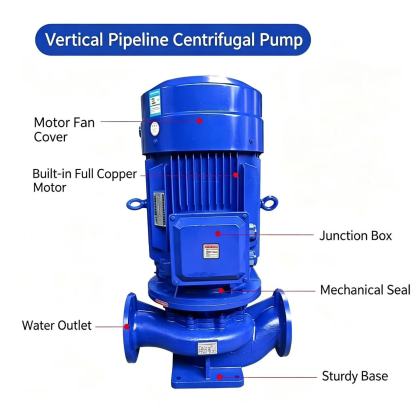
The integrated design of the ISG vertical pipeline centrifugal pump places the impeller directly on the motor shaft, creating a compact, coaxial assembly that relies on precise internal alignment for smooth operation. When piping weight presses down on the pump body, the casing deforms slightly, shifting the relative position of the impeller, seal faces, and bearing housings. This small misalignment generates uneven radial forces during rotation, which translate into higher vibration levels, faster bearing wear, and increased motor current draw. The mechanical seal, one of the most sensitive components in the entire unit, is particularly vulnerable to this kind of indirect stress. Even a tiny angular offset between the rotating and stationary seal faces can break the critical liquid film that prevents dry friction, leading to frequent leaks and unexpected seal replacement. Over months of continuous operation, the accumulated stress can also crack the pump casing at flange connection points, especially under thermal cycling conditions where piping expands and contracts with temperature changes.
Practical Field Methods to Eliminate Pipeline Load on Pump Casing
Before making any final flange connections, position independent pipe supports on both the suction and discharge sides, as close to the pump as possible without interfering with normal maintenance access. These supports must be anchored firmly to the floor or nearby structural steel, and adjusted with adjustable feet or hangers to carry the full static weight of the piping, valves, and fluid inside the line. After rough positioning, use a soft rubber mallet to gently tap the piping near each flange and observe if any movement transfers to the pump body. If the pump shifts even slightly when you apply light pressure to the connected pipe, the support system is not yet carrying enough load. A simple effective test is to remove all flange bolts temporarily and check that the piping ends align perfectly with the pump flanges without any prying, pulling, or lifting required to bring them together. If you need to force the pipe into position to match the bolt holes, the piping is already imposing unnatural stress on the pump, and you must readjust the supports until the two faces meet freely.
Installation Sequences That Prevent Hidden Stress Transfer
Start the installation process by securing the pump to its designated base, leveling it accurately, and tightening all foundation bolts to the recommended torque value. Complete all piping layout, welding, and support installation work before bringing the pipe ends near the pump flanges. This way, all thermal deformation and welding stress in the piping system is fully released before any connection is made to the pump unit. When you begin the final flange assembly, insert all bolts by hand first to confirm they slide smoothly through every hole without resistance. Tighten the bolts gradually in a diagonal pattern, alternating opposite sides in small increments rather than fully tightening one bolt before moving to the next. After all bolts are secured, recheck the pump shaft for free rotation by manually turning the motor fan a full several circles. If you notice any new stiffness, binding, or change in rotational resistance that was not present before piping connection, loosen the flange bolts slightly, readjust the nearby pipe supports, and repeat the alignment process. Once the system is filled with process liquid and pressurized to normal operating conditions, perform this shaft rotation check a second time to confirm that fluid weight and system pressure have not introduced new unbalanced loads onto the pump body.
Even after the system passes initial commissioning, make it a routine practice during periodic inspections to check the condition of nearby pipe supports. Watch for sagging hangers, cracked support brackets, or settlement of the floor under heavy piping that could slowly shift load back onto the pump over years of operation. This simple ongoing check helps preserve the original factory alignment, keeps vibration levels low, and ensures the pump runs with consistent efficiency for its entire designed service life.


