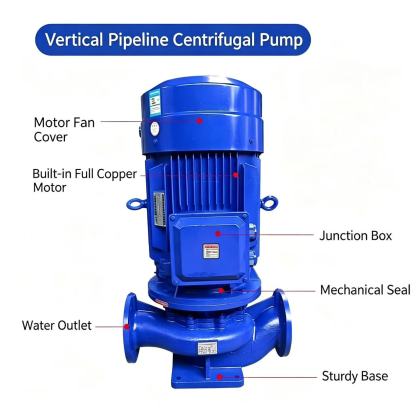
The vent valve on an ISG vertical pipeline centrifugal pump sits at one of the most critical points on the casing, and its proper installation directly determines whether the pump can achieve stable priming, avoid internal air locking, and maintain consistent hydraulic performance during long-term operation. Many installation teams treat this small component as a trivial afterthought, often mounting it in the wrong position, using overly long connecting lines, or skipping basic functional checks after assembly. These seemingly minor errors leave trapped air pockets inside the pump casing, which cause uneven flow, unexpected vibration, reduced effective head, and even extended periods of unstable operation right after startup. Correct vent valve installation does not demand complicated specialized tools, but it does require strict adherence to basic field engineering principles that align with how the pump’s internal flow path is actually designed.
Positioning Rules for Reliable Air Evacuation
The vent valve must be installed at the absolute highest point of the pump casing, where all free air inside the pump will naturally accumulate during the liquid filling process. If the valve is mounted even slightly below this peak elevation, small air pockets will remain trapped above the valve opening, never fully evacuating even after repeated venting cycles. These hidden air pockets will gradually release small bubbles into the impeller during operation, creating intermittent flow fluctuations that make system pressure unstable and increase noise levels. The mounting connection should face upward at a slight angle rather than being oriented horizontally or downward, so that air bubbles can rise directly to the valve opening without being blocked by any internal liquid surface. Never relocate the vent valve to a nearby section of piping just to make the connection easier to reach, because piping high points do not align perfectly with the pump casing’s internal air collection zones, and this mistake will leave consistent residual air inside the pump chamber. For pump installations where the casing orientation is adjusted slightly during alignment, always confirm the vent valve remains at the highest point before tightening its final connection.
Piping and Connection Standards That Avoid Hidden Problems
Keep the connecting line between the pump casing vent port and the vent valve as short as possible, using only a minimal number of threaded fittings to reduce the chance of small leaks that could draw air back into the system after priming. Do not install narrow, extended tubing that creates extra volume where trapped liquid can stagnate, because this will slow down air release and make it difficult to visually confirm when all air has been fully evacuated during priming. The discharge side of the vent valve should be routed to a visible, open location where escaping air and small amounts of discharged liquid can be clearly seen by the operator performing the priming process. This allows technicians to observe the exact moment steady liquid flows out without any mixed air bubbles, which is the clear signal that full priming has been completed. Avoid routing the vent discharge into enclosed piping or hidden drainage lines, because this removes the visual feedback that is essential for confirming successful air evacuation. The valve itself should be easy to reach by hand, without requiring technicians to stretch over hot piping, climb on unstable surfaces, or remove heavy insulation to access the operating handle.
Post-Installation Functional Verification and Operational Alignment
Once the vent valve is fully mounted and all connections are tightened, perform a full liquid filling test before the pump is electrically connected for the first time. Close the discharge isolation valve, open the suction line fully, and slowly introduce liquid into the pump casing while keeping the vent valve partially open. Watch the discharge end of the vent line closely, and continue the filling process until a steady stream of liquid flows out with no more spurts, bubbles, or intermittent air bursts. At that point, close the vent valve firmly and check that no liquid continues to leak out through the valve seat. After the first successful startup, leave the vent valve slightly accessible for the first few hours of operation, so that any remaining small pockets of trapped air that rise to the high point during initial flow stabilization can be manually released. For pumps that handle high-temperature media, recheck the vent valve function after the system reaches full operating temperature, because thermal expansion of the liquid can release additional dissolved air that accumulates at the top of the casing. Never use the vent valve as a permanent bleed or process sampling point during normal continuous operation, because this practice can introduce unplanned air ingestion that disrupts the pump’s internal hydraulic balance.
During routine periodic inspections, take a few seconds to gently operate the vent valve once every few weeks, to confirm the stem moves freely and that no sediment buildup from the process liquid has partially blocked the small internal opening. This simple regular check ensures the valve will function reliably the next time the pump needs to be primed after a shutdown, and prevents avoidable air locking issues that can delay system startup and create unnecessary operational headaches.


