High altitude installation of an ISG vertical pipeline centrifugal pump introduces a set of unique operational challenges that do not appear at near-sea-level sites, and overlooking these environmental differences can lead to degraded performance, unexpected overheating, or unstable operation long before the system reaches its expected service life. At elevations above 1000 meters, lower atmospheric pressure, thinner air, larger temperature swings, and reduced oxygen availability all interact to change how the pump and its connected motor behave during steady state and transient conditions. Many standard installation procedures that work reliably at low elevation fail to account for these shifts, leaving the system vulnerable to cavitation, motor overheating, and inconsistent flow output. Proper high altitude adaptation does not require full redesign of the pump unit, but it does demand targeted adjustments to installation practices that align with the local environmental conditions.
NPSH and Suction Side Adjustments for Low Atmospheric Pressure
At high altitude, the drastically reduced atmospheric pressure directly lowers the available net positive suction head at the pump suction flange, even when the physical elevation difference between the suction liquid surface and pump inlet remains unchanged. This makes the system far more vulnerable to cavitation, even with suction line configurations that would work perfectly safely at sea level. During installation, raise the static liquid level on the suction side by a small additional margin, to compensate for the lost atmospheric pressure that would otherwise push fluid into the pump casing. Eliminate all unnecessary elbows, reducers, and flow restrictions from the suction line, and keep the total straight length of unobstructed piping before the pump inlet as long as practical, to minimize friction losses that further erode available suction head. Install the suction strainer with a larger open surface area than you would use at low elevation, and make sure it is positioned in a fully submerged location where vortex formation cannot pull air into the line. Even small amounts of entrained air that would be harmless at sea level can trigger cavitation noise and impeller erosion far more easily under low ambient pressure conditions. Double check all suction side flange connections and gasket seals to eliminate even the tiniest air ingestion paths, because any leak that draws air into the line will create far more severe operational problems at high altitude.
Motor and Electrical Installation Modifications for Thin Air Conditions
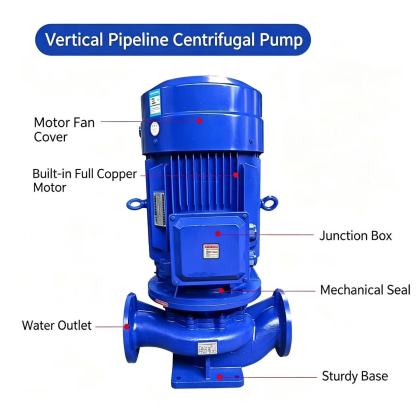
The thinner, less dense air at high elevation drastically reduces the convective cooling capacity around the motor frame, even when the ambient air temperature feels identical to readings taken at sea level. A standard motor sized correctly for low elevation operation can easily run 10 to 15 percent hotter under full load at high altitude, because there is simply less air mass moving across the cooling fins to carry away waste heat. During installation, make sure the motor is positioned with unobstructed airflow around its entire frame, and avoid enclosing it in a tight, poorly ventilated cabinet that traps hot air close to the motor surface. Adjust the motor overload protection setting slightly below the nameplate rated current, to trip earlier and prevent extended operation at high temperatures that would degrade winding insulation life over time. Verify that the terminal block connections are fully tightened and sealed against fine, dry high altitude dust, which can accumulate on winding surfaces and further reduce heat transfer efficiency. If the installation site is exposed to large day-night temperature swings, add a small space heater inside the motor terminal box to prevent condensation from forming inside the winding insulation as temperatures drop after shutdown. This small adjustment prevents unexpected electrical faults that are far more common in high altitude locations with extreme diurnal temperature variation.
Casing, Seal and Piping Adaptations for Extreme Site Conditions
High altitude sites often see far wider temperature swings than low elevation locations, with freezing nighttime conditions followed by strong solar heating during the day, creating repeated thermal cycling that puts extra stress on pump components and connected piping. During installation, select seal materials that maintain consistent elasticity across a much wider temperature range, to prevent leakage that could develop as the pump casing expands and contracts with temperature changes. Install independent pipe supports on both suction and discharge sides with extra attention to thermal movement allowance, so that piping expansion and contraction does not transfer mechanical stress directly to the pump casing and pull the shaft out of alignment. Add a properly sized drain port at the lowest point of the pump casing, and make sure it is fully functional so that all residual liquid can be completely drained after shutdown if freezing conditions are expected. This prevents trapped water from expanding and cracking the pump casing during cold nights, a very common failure mode at high elevation sites. When laying out the full system, leave extra clearance around the pump unit for regular inspection and maintenance, because high altitude sites often have limited access to replacement parts, and unexpected faults can take far longer to resolve than they would at low elevation locations.
After the initial startup, run the pump through a full multi-hour thermal cycle, and log motor temperature, vibration levels, and suction pressure readings across the full operating range. Compare these values against baseline sea level performance data, and make small incremental adjustments to valve positions and protection settings until the unit runs stably within all safe operating limits. This careful commissioning step ensures the adapted installation handles the unique high altitude conditions reliably, without unexpected downtime or premature component wear.


